Contact us for Information and Pricing
Get expert advice and tailored solutions for your research needs
Contact us for Information and Pricing
Get expert advice and tailored solutions for your research needs
2023 • Solar Energy Materials and Solar Cells Volume 260, 15 September 2023, 112461
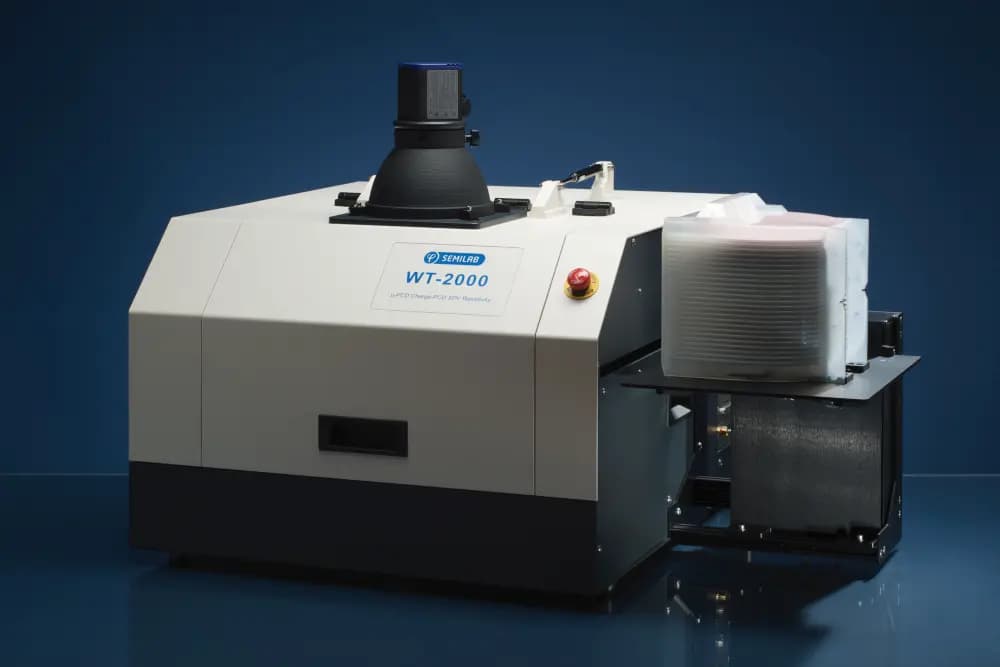
For the first time, we have successfully combined the transient, steady-state, and small perturbation photoconductance decay lifetime measurement methods into a single system. The three operation modes complement each other and enhance the accuracy of each measurement, effectively compensating for the limitations of each individual mode. The goal is to provide very accurate carrier lifetime τ results as a function of injection level Δn over the entire illumination intensity range of interest for modern Si solar cells. The combination of the three methods not only results in mobility model-free τ(Δn) data with improved accuracy but provides the sum of the excess carrier mobilities as a function of Δn as well. This is important at high injection levels, where modern solar cells operate but mobility models in the literature exhibit significant differences.
The experimental setup developed for this purpose utilizes an eddy-current photoconductance sensor and lasers for the precise light control. Maintaining stable temperature for such measurements is a challenge that is overcome by applying smart laser control and advanced ventilation. The measurements yielded excellent agreement in the τ(Δn) values determined in the three fundamentally different modes and provided mobility values close to previously presented mobility models.
Dávid Krisztián, Ferenc Korsós, Gergely Havasi
See our related products to this publication: